Visa-free 90+ countries
Som (12,700/USD)
Apr–May, Sep–Oct
Very safe ★★★★★
Uzbekistan is the last truly undiscovered great Silk Road destination. A country where you can stand in front of five-hundred-year-old monuments without crowds, without barriers, without the feeling that you are watching history through glass. Samarkand, Bukhara, and Khiva are each the kind of place that would justify a transcontinental flight on their own. The fact that all three sit within 700 km of each other makes Uzbekistan one of the most efficiently structured travel itineraries in the world.
It is important to have realistic expectations. If you travel in July or August, you will face extreme desert heat that routinely hits 40–45°C in Bukhara and Khiva. At sunset in peak season, Samarkand's Registan can become crowded with tour groups. Some monuments have been restored so aggressively that they look nearly new. And tourism infrastructure outside the major cities is still catching up to international standards.
But these are precisely the reasons Uzbekistan is compelling right now. The country is in the middle of a tourism boom — boutique hotels are opening, service standards are rising — but it has not yet reached the saturation point where you need to book the Registan three months in advance like the Roman Colosseum. From a safety and value perspective, Uzbekistan is one of the best-run tourism destinations in Asia: low crime, extraordinary hospitality, and prices far below comparable historical destinations in Europe or the Middle East.
Is Uzbekistan Worth Visiting?
If you have ever cared about history, architecture, or overland travel — yes, absolutely. The scale and condition of Uzbekistan's historical monuments has no equal in the region. Here are five reasons to go now:
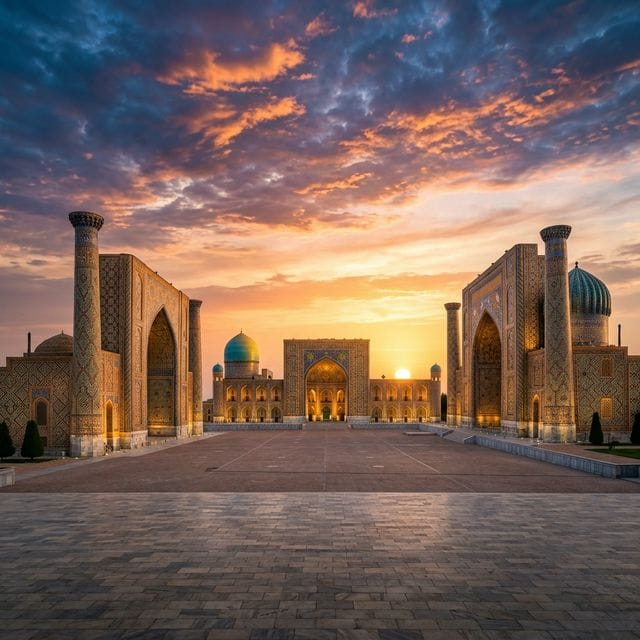
- Unmatched architecture. The Registan in Samarkand, the Kalon Minaret in Bukhara, the Ichon-Qala walled fortress in Khiva — sites that in any other country would require hours in a queue. Here, you walk in with almost no wait.
- Exceptional value. A boutique guesthouse in the historic center costs $40–70 per night. A full restaurant meal costs $4–8. A private car transfer from Samarkand to Bukhara runs $35–50. That is cheaper than most European city breaks.
- Genuine safety. Uzbekistan ranks in the global top 30 for safety. Crimes against foreign tourists are vanishingly rare. Walking around at night is comfortable in all major cities.
- Extraordinary food. Uzbek cuisine is one of the most distinctive in the world. Samarkand-style plov from an enormous iron kazan, fresh samsa from a clay tandoor, hand-pulled lagman noodles — dishes you will still be thinking about months after you return.
- The right moment. Uzbekistan opened fully to international tourism only after 2017. This is a rare window to experience one of the great historical destinations before mass tourism fully arrives.
Who might not love it: if you are seeking beach holidays, nightlife, or diverse international cuisine, this is not the right trip. Uzbekistan is built for travelers who want history, culture, and authentic experience.
Best Time to Visit Uzbekistan
Uzbekistan has a sharply continental climate: scorching summers, cold winters, and two ideal shoulder seasons that frame the year. Choosing the right month can transform your entire experience.
Spring
March–May
10–28°C
Summer
June–August
35–45°C
Autumn
Sep–November
8–30°C
Winter
Dec–February
0–8°C
| Month | Temp. |
|---|---|
| March | 10–18°C |
| April | 18–25°C |
| May | 22–30°C |
| June | 30–38°C |
| July | 38–45°C |
| August | 36–44°C |
| September | 25–32°C |
| October | 15–25°C |
| November | 8–15°C |
| December | 0–8°C |
| January | –5–5°C |
| February | 0–10°C |
How to Get Around Uzbekistan
Between the four main cities there are several transport options, and the right choice depends on your route, budget, and tolerance for logistics.
Private Car Transfer
Afrosiyob High-Speed Train
Shared Taxi
The Classic 7-Day Uzbekistan Itinerary
This is the most popular first-visit itinerary. It covers Tashkent, Samarkand, Bukhara, and Khiva at a comfortable pace — no rushing, no wasted transit days.
Day 1 — Tashkent
- ›Airport pickup and hotel check-in
- ›Chorsu Bazaar: giant medieval dome, spice mountains, clay-oven bread
- ›Khast Imam Complex: Tillya-Sheikh Mosque and the 7th-century Uthman Quran
- ›Metro tour: Alisher Navoi and Kosmonavtlar stations (Soviet mosaics)
- ›Dinner in the Mirabad restaurant district
Day 2 — Tashkent → Samarkand
- ›Morning: State History Museum (1 hr)
- ›315 km to Samarkand by private car (4–5 hours)
- ›En route: mountain pass with Tian Shan views
- ›Evening: Registan square illuminated — the best possible first impression
Day 3 — Samarkand
- ›Registan: Ulugh Beg Madrasah (15th c.), Sherdor, and Tillya-Kari
- ›Shah-i-Zinda necropolis: 11 tiled mausoleums, finest tilework in the country
- ›Bibi-Khanym Mosque: Central Asia's largest mosque at Timur's peak
- ›Siyob Bazaar: spices, dried fruits, bread, regional produce
- ›Book a local guide via TourFixer →
Day 4 — Samarkand → Bukhara
- ›Morning: Ulugh Beg Observatory (15th c.) + Gur-e-Amir mausoleum (Timur's tomb)
- ›275 km to Bukhara by private car (~4.5 hours)
- ›Stop: Rabat-i Malik caravanserai ruins, 11th century (roadside, no queue)
- ›Evening: walk around Lyabi-Hauz pool, dinner on an open terrace
Day 5 — Bukhara
- ›Ark Fortress: Bukharan emirs' citadel, 6th–20th century
- ›Po-i-Kalyan ensemble: Kalon Minaret (47m, survived the Mongols)
- ›16th-century trading domes: Toki-Sarrafon (jewelers), Toki-Telpak-Furushon
- ›Samanid Mausoleum (9th–10th c.) — oldest building in Bukhara
- ›Evening: wine tasting dinner — Bukhara has a long viticulture tradition
Day 6 — Bukhara → Khiva
- ›450 km across Kyzylkum Desert by private car (6–7 hours)
- ›Desert stretches flat in every direction — bring snacks and music
- ›Arrive in Khiva, check in to hotel inside Ichon-Qala
- ›Sunset from Kunya-Ark watchtower: the mud-brick walls glow orange
Day 7 — Khiva & departure
- ›Ichon-Qala: Kalta-Minor minaret (abandoned, unfinished), Juma Mosque (218 carved pillars)
- ›Tosh Hovli Palace: khans' harem, extraordinary carved gypsum decoration
- ›Pahlavon Mahmud mausoleum, carpet and silk bazaar
- ›Transfer to Urgench Airport (35 km) → flight back to Tashkent
10-Day Itinerary: The Extensions
If you have three extra days, add them at these points in the itinerary — they will substantially deepen your experience.
- +1 day in Samarkand (between Days 3 and 4): Ulugh Beg Observatory (15th c.) with live demonstration of the astronomical instruments. Konigil Paper Mill, 10 km out — mulberry-bark paper made on a watermill using a 600-year-old method. Studio of Abdullo Nurullaev, a master of traditional Samarkand silk carpets.
- +1 day in Shakhrisabz (between Days 4 and 5): Timur's birthplace, 85 km south of Samarkand. Ak-Saray Palace ruins — the 40m gate arch is the only fragment remaining of "The White Palace." Kok Gumbaz Mosque. Continue 290 km to Bukhara instead of 275 km — a minor difference if you leave in the morning.
- +1 day in the Fergana Valley (Day 10, from Tashkent): Drive through Kamchik Pass to Kokand — Khudayar Khan Palace. Margilan: Yodgorlik Silk Factory, the only place in the country where traditional ikat is woven by hand on wooden looms. Rishtan: blue ceramics made from local blue clay using techniques that have not changed in 2,000 years.
Uzbekistan's Four Main Cities
Tashkent
The largest city in Central Asia, rebuilt after a 1966 earthquake. Wide Soviet modernist avenues share space with ancient bazaars and Islamic architecture. The Khast Imam complex holds one of the world's oldest Qurans. Chorsu Bazaar's giant dome shelters mounds of spices and fresh bread. Use Tashkent to acclimatize before diving into older cities. Allow 1–2 days.
Samarkand
The Silk Road's most iconic city. Timur made Samarkand the capital of his empire, pouring wealth into the Registan, Bibi-Khanym Mosque, and Shah-i-Zinda necropolis. The cobalt tilework is spectacular. Samarkand is a large, modern city — historical sites are spread across different neighborhoods. Allow 2–3 days.
Bukhara
The personal favorite of most travelers. The historic core is compact, car-free, and barely changed in centuries. Trading domes from the 16th century still operate as craft workshops. The Samanid Mausoleum (9th–10th c.) is the oldest building in Uzbekistan. Evening at Lyabi-Hauz pool with dinner under mulberry trees is the most memorable night of any Uzbekistan itinerary. Allow 2–3 days.
Khiva
The best-preserved medieval city in Central Asia. Ichon-Qala — the inner walled city — is entirely car-free, and its mud-brick walls glow orange at sunset in a way that no photograph properly captures. Khiva is the most remote of the four cities: 450 km from Bukhara. The Kalta-Minor minaret, abandoned unfinished when the khan died, is one of the most distinctive silhouettes in Central Asia. Allow 1–2 days.
Culture & Customs
Uzbekistan is a predominantly Muslim country with a rich, layered cultural heritage. A few simple customs will make your trip significantly more enjoyable for both you and the people you meet.
Dress code
Cover shoulders and knees when entering mosques and religious sites. Women should carry a light scarf. In cities and restaurants, dress normally — Uzbekistan is not a strict country.
Photography
Ask before photographing people, especially older women at markets. Photography is allowed at most monuments. Inside mosques, check with the guard first.
Greetings
Men greet with a handshake. Between a man and a woman, a nod or hand on heart is appropriate. Do not extend your hand first to a woman — wait for her to initiate.
Bargaining
Prices at bazaars often start higher for tourists. Friendly bargaining is normal in souvenir and carpet stalls. In cafes and restaurants, prices are fixed — no bargaining.
Ramadan
Uzbekistan is not strict during Ramadan. Cafes and restaurants remain open. Show basic respect: avoid eating conspicuously in front of people who are fasting.
Tipping
Tipping is not mandatory but appreciated. In restaurants, $1–2 or 5–10% is generous. For guides and drivers, $5–10 per day is a well-received gesture.
Uzbekistan Visa & Entry Requirements
- Visa-free (30 days): Russia, Belarus, Kazakhstan, Ukraine, all EU member states, UK, Turkey, Japan, South Korea, UAE, Malaysia, Indonesia, Israel, and 60+ other nations.
- E-Visa required: USA, Canada, India, China, and others. Apply at e-visa.gov.uz. Cost: $20. Processing: 3 business days. Print the visa and present it at border control.
- Passport validity: At least 6 months from your entry date. Minimum two blank pages for stamps.
- Customs: Declare cash above $2,000. Large sums leaving the country may require proof of bank exchange. Antique export requires a permit — if buying rugs or art, ask the seller for documentation.
- Police registration: All visitors must be registered with authorities. Hotels do this automatically and give you a paper slip — keep it in your passport for the duration of your stay. If renting a private apartment, your host must register you at emehmon.uz.
Money & Budget
Uzbekistan is genuinely affordable with a stable exchange rate and improving card infrastructure in major cities.
| Expense | Budget | Mid-range | Luxury |
|---|---|---|---|
| Hotel / night | $20–35 | $45–80 | $100–200 |
| Breakfast | $2–4 | $5–10 | $12–20 |
| Lunch | $3–6 | $8–15 | $20–35 |
| Dinner | $4–8 | $10–20 | $25–50 |
| Intercity transfer | $15–25 | $35–60 | $80–120 |
| Private guide / day | $30–50 | $60–90 | $100–150 |
| Entrance tickets | $5–15 | $15–30 | $30–50 |
| Total per day | $50–80 | $100–150 | $200+ |
Practical money tips: Visa/Mastercard ATMs at Kapitalbank and Ipak Yuli work reliably in all major cities. Always carry cash — outside city centers many cafes and guesthouses are cash-only. Bring US dollar bills printed after 2013, with no folds, writing, or marks. Damaged bills may be refused. Tashkent to Samarkand transfer from $55.
Is Uzbekistan Safe?
Uzbekistan is one of the safest tourist destinations in the world. Independent safety indices consistently rank it in the global top 30. Violent crime against foreign visitors is extremely rare. A dedicated tourist police force operates in all major historical areas. Locals are famously helpful and will often go out of their way to assist disoriented travelers.
- Nighttime: Walking around city centers at night is safe. Historical areas are well-lit and populated in the evenings.
- Solo women: Uzbekistan is safe for solo female travelers. The main recommendation is to dress modestly when visiting mosques and conservative areas — cover shoulders and knees.
- Common annoyances: Unofficial taxis at airports quote inflated prices. Always agree on a price before getting in, or use Yandex Go. A pre-booked transfer is the most reliable option.
- Health: Tap water is not safe to drink — use bottled water only. In summer: wear a hat, use high-SPF sunscreen, carry rehydration tablets. Uzbekistan's bazaar produce is high quality — fresh fruits and vegetables are safe.
- Insurance: Standard travel insurance with $50,000 medical coverage is sufficient. Private clinics in Tashkent are inexpensive and accessible.
SIM Card & Internet in Uzbekistan
- Where to buy: Tashkent Airport immediately after clearing customs, or at any operator store in the city. Passport required.
- Providers: Beeline, Ucell, Mobiuz. A 10–30GB data package costs $5–10. Setup takes 15–20 minutes.
- Coverage: 4G is reliable in major cities. Khiva's thick clay walls can weaken indoor signal. The Bukhara–Khiva desert road has dead zones for 100–200 km — download offline maps beforehand.
- Wi-Fi: Free Wi-Fi is standard in hotels. Most cafes in tourist areas also offer it.
- Useful apps: Yandex Go (taxis), 2GIS (offline maps), Google Translate with Uzbek/Russian pack downloaded.
What to Eat in Uzbekistan
Uzbek cuisine is one of the most distinctive and underrated in the world, shaped by a thousand years of Persian, Turkic, and Mongolian culinary influence meeting along the Silk Road. Here are the essential dishes to try.
Plov
Rice with mutton, carrots, chickpeas, raisins, and garlic, slow-cooked in a massive iron kazan. Try it at Tashkent's Besh Qozon center — queue forms at 11am. Samarkand plov uses a slightly different recipe to Tashkent's.
Samsa
Flaky pastry with minced lamb or pumpkin, baked in a clay tandoor. Hot, juicy inside from rendered fat. Best eaten straight from the oven at a bazaar.
Lagman
Hand-pulled noodles in rich mutton broth, or stir-fried with meat and vegetables. A Dungan-origin dish, perfect on a cool day. The noodle is pulled fresh in front of you.
Shashlik
Marinated lamb, beef, or chicken on metal skewers over charcoal. Served with onions seasoned in vinegar. Best shashlik is found at bazaars and roadside spots.
Manti
Large steamed dumplings filled with minced lamb, onion, and pumpkin. Served with sour cream and chili sauce. Filling — 4–5 pieces is plenty.
Non (bread)
Uzbek tandoor flatbread with a distinctive stamped pattern. Bread is a serious culture here — different regions have different shapes. Samarkand non is considered the best.
Chalop
Cold kefir with fresh herbs, cucumber, spring onion, and garlic. A lifesaver in summer heat. Sold at bazaars and local cafes.
Melon
Uzbek melons are genuinely world-class. In September, bazaars sell 50+ varieties. No imported melon compares — even people who don't like melon change their opinion here.