Complete guide to vegetarian and vegan food in Uzbekistan. Best meat-free dishes, where to find them, useful phrases, and tips for plant-based travelers on the Silk Road.
Let’s address the elephant in the room: Central Asia is famously a meat-lover's paradise. If you search for traditional Uzbek cuisine, you will see endless photos of lamb skewers (shashlik), steaming bowls of beef-laden plov, and meat-stuffed pastries. For vegetarian and vegan travelers, this visual landscape can trigger serious pre-trip anxiety.
But here is the good news: Uzbekistan is also an agricultural powerhouse. The ancient Silk Road oasis cities grow some of the most flavorful fruits and vegetables on the planet. With the right local knowledge, a few essential phrases, and an understanding of how local kitchens operate, you will not just survive in Uzbekistan—you will experience a culinary side of the Silk Road that most tourists completely miss.
This comprehensive 2026 guide is your definitive resource. We cover the brutal reality of ordering food, the hidden animal products you must watch out for, the best regional meat-free specialties, and how to navigate every meal from the bazaar to the guesthouse.
[[CTA-GUIDE city="Uzbekistan"]]
The Brutal Reality of Uzbek Kitchens (The "Insider" Warnings)
Before we get to the delicious food, we need to talk about cross-contamination. Most travel blogs gloss over this, but as local experts, we want you to be fully prepared for how traditional Uzbek kitchens actually function.
1. The Dumba Danger (Lamb Tail Fat)
In traditional Uzbek cooking, dumba (rendered lamb tail fat) is the gold standard for flavor. Even if a dish doesn't have chunks of meat, it might be cooked in a base of dumba. This is especially true for "vegetable" side dishes or fried potatoes. You must explicitly ask for dishes cooked in vegetable oil ("o'simlik yog'i").
2. The "Meat is a Flavoring" Philosophy
In many traditional mahallas (neighborhoods), meat isn't just a main course; it's a seasoning. Some cooks might believe a dish is "meat-free" if they only used a small amount of minced meat for flavor. You need to be very firm: no beef, no lamb, no chicken, no animal fat.
3. The Hidden Beef Broth
Dishes like Vegetable Lagman (hand-pulled noodles) are fantastic, but the noodles are almost always served in a broth. In 90% of local teahouses (chaikhanas), that broth is beef-based. Unless you are at a modern cafe in Tashkent, always assume the soup base is meat-based unless you specifically ask for it to be made with water or pure vegetable stock.
4. Shared Cooking Surfaces
In bazaars, the same tandyr (clay oven) used for meat somsa is used for plain bread. If you are a strict vegan or have severe allergies, be aware that the golden crust of the bread might have touched the same surface where meat fats have dripped.
Private Transfer
Need a private transfer across Uzbekistan?
Skip shared buses and unreliable taxis. Book a premium private car with fixed prices, professional drivers, and door-to-door service.
The Silk Road Vegan Pantry: What You’ll Actually Eat
1. Non (The Holy Grail of Bread) 🍞
Uzbek bread is more than food; it is a cultural icon. It is baked daily in a tandyr.
- Is it safe? Yes. Standard Obi-non is vegan (flour, water, yeast, salt).
- The Variety: Every city has its own. Samarkand Non is heavy and thick, while Tashkent Non is light and airy.
- Warning: Some luxury Patir breads are made with milk, butter, or even lamb fat. Stick to the standard Obi-non if you are vegan.
2. The Best Tomatoes on Earth (Achichuk) 🥗
Because of the intense desert sun, Uzbek tomatoes have a sweetness you won't find in Europe or the US.
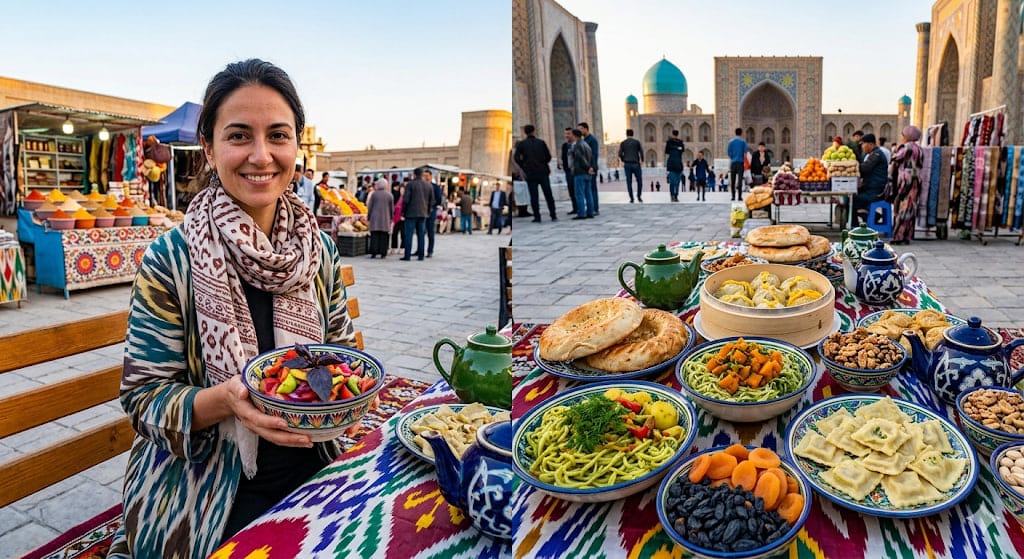
- Achichuk (Achchiq-Chuchuk): This is the vegan survival dish. It’s a simple salad of perfectly sliced tomatoes, cucumbers, white onions, and fresh purple basil. It is served without oil or dressing—the juice from the tomatoes is enough.
- Shakarob: A similar version often served with hot bread.
3. Kadu Manti (Pumpkin Dumplings) 🥟
Manti are large steamed dumplings. During the autumn and winter, pumpkin becomes the king of the kitchen. Kadu Manti are filled with shredded pumpkin, onions, and black pepper. They are sweet, spicy, and incredibly filling.
- Pro Tip: Traditionally served with Suzma (strained yogurt), so vegans should ask for them plain or with a side of tomato sauce.
4. Shivit Oshi (The Green Pasta of Khiva) 🍜
If you are in the ancient city of Khiva, you MUST try Shivit Oshi. It is a bright green pasta infused with fresh dill.
- The Veggie Version: It is usually topped with a meat stew, but if you book through TourFixer, we can arrange for the kitchen to serve it with a potato-and-pepper based sauce instead. It is the most Instagrammable vegetarian dish in the country.
5. Tuxum Barak (Egg Dumplings) 🍳
Another specialty from the Khorezm (Khiva) region. These are square ravioli-style dumplings filled with an egg-and-milk mixture before being boiled.
- Status: Perfect for vegetarians, not for vegans.
The Bazaar Strategy: How to Feast Like a King
If you find yourself in a city where the restaurant menus are 100% meat, head immediately to the local bazaar (Chorsu in Tashkent or Siyob in Samarkand). This is where the plant-based traveler truly wins.
- The Nut & Fruit Section: You can buy world-class walnuts, pistachios, and almonds for a fraction of Western prices.
- Dried Gold: Uzbek apricots (dried naturally without sulfur) and black raisins are nature’s candy. They are the perfect high-energy snack for the Afrosiyob train rides.
- Melon Paradise: From July to September, the melons in Uzbekistan are life-changing. There are dozens of varieties, from the crunchy Handalyak to the honey-sweet Mirzachul.
- Korean Salads: Because of the historical Korean diaspora in Uzbekistan, every bazaar has a section of spicy, fermented vegetable salads (Morkovcha - spicy carrots, pickled seaweed, etc.). Most of these are vegan-friendly and incredibly flavorful.
Private Transfer
Uzbekistan · Door-to-Door
Need a private transfer across Uzbekistan?
Skip shared buses and unreliable taxis. Book a premium private car with fixed prices, professional drivers, and door-to-door service.
Vegetarian Logistics: Planning Your Meals
Breakfast (The Easiest Meal)
Traditional Uzbek breakfast is naturally vegetarian-friendly. It usually consists of:
- Fresh Non bread.
- Local honey and jams (apricot, cherry, quince).
- Kaymak (heavy clotted cream—a vegetarian favorite).
- Huge plates of seasonal fruits (grapes, figs, cherries).
- Walnuts and raisins.
- Endless pots of green or black tea.
Staying at Guesthouses vs. Hotels
We always recommend guesthouses for vegetarians. Large hotels often have generic buffet breakfasts. In a family-run guesthouse, you can sit down with the host the night before and say: "Tomorrow, can we have vegetable somsa or pumpkin manti?" Because they cook in small batches, they are almost always happy to accommodate you.
City-by-City Survival Guide
| City | Difficulty | Best Bet |
|---|---|---|
| Tashkent | Very Easy | Modern cafes, Indian restaurants, and Korean food. |
| Samarkand | Easy | Tourist restaurants near Registan have dedicated veggie sections. |
| Bukhara | Easy | Guesthouses in the Old City are very accommodating. |
| Khiva | Moderate | Ask specifically for *Shivit Oshi* or *Tuxum Barak*. |
| Nukus/Fergana | Hard | Rely on Bazaars, bread, and basic tomato salads. |
Essential Phrases (Screenshot This!)
| English | Uzbek (Show this) | Russian (Show this) |
|---|---|---|
| I am a vegetarian. | Men vegetarianman. | Ya vegetarianets. |
| I don't eat ANY meat. | Men umuman go'sht yemayman. | Ya voobshche ne yem myaso. |
| No lamb fat! | Dumba yog'i solmang! | Bez kurdyuka! |
| I am vegan (no eggs/milk). | Men veganman (tuxum/sut yemayman). | Ya vegan (bez yaits i moloka). |
| Only vegetables, please. | Faqat sabzavotlar, iltimos. | Tolko ovoshchi, pozhaluysta. |
Conclusion: You Won't Go Hungry!
Traveling the Silk Road as a vegetarian or vegan requires a little extra planning, but it is one of the most rewarding ways to experience the country. You will find yourself spending more time in the vibrant bazaars and connecting with local families over home-cooked vegetable feasts.
Contact TourFixer today to book a local guide who understands your dietary needs and can show you the delicious, meat-free side of Uzbekistan!
Last updated: February 2026. This guide is curated by local tourism experts in Samarkand to ensure you have the most accurate, up-to-date information for your journey.
[[CTA-GUIDE city="Uzbekistan"]]
Frequently Asked Questions
The Brutal Reality of Uzbek Kitchens (The "Insider" Warnings)?
Before we get to the delicious food, we need to talk about cross-contamination. Most travel blogs gloss over this, but as local experts, we want you to be fully prepared for how traditional Uzbek kitchens actually function. ### 1. The Dumba Danger (Lamb Tail Fat) In traditional Uzbek cooking, dumba (rendered lamb tail fat) is the gold standard for flavor.…
The Silk Road Vegan Pantry: What You’ll Actually Eat?
1. Non (The Holy Grail of Bread) 🍞 Uzbek bread is more than food; it is a cultural icon. It is baked daily in a tandyr. * Is it safe? Yes. Standard Obi-non is vegan (flour, water, yeast, salt). * The Variety: Every city has its own. Samarkand Non is heavy and thick, while Tashkent Non is light and…
The Bazaar Strategy: How to Feast Like a King?
If you find yourself in a city where the restaurant menus are 100% meat, head immediately to the local bazaar (Chorsu in Tashkent or Siyob in Samarkand). This is where the plant-based traveler truly wins. * The Nut & Fruit Section: You can buy world-class walnuts, pistachios, and almonds for a fraction of Western prices. * Dried Gold: Uzbek apricots…
Vegetarian Logistics: Planning Your Meals?
Breakfast (The Easiest Meal) Traditional Uzbek breakfast is naturally vegetarian-friendly. It usually consists of: - Fresh Non bread. - Local honey and jams (apricot, cherry, quince). - Kaymak (heavy clotted cream—a vegetarian favorite). - Huge plates of seasonal fruits (grapes, figs, cherries). - Walnuts and raisins. - Endless pots of green or black tea. ### Staying at Guesthouses vs.…
City-by-City Survival Guide?
City Difficulty Best Bet Tashkent Very Easy Modern cafes, Indian restaurants, and Korean food. Samarkand Easy Tourist restaurants near Registan have dedicated veggie sections. Bukhara Easy Guesthouses in the Old City are very accommodating. Khiva Moderate Ask specifically for Shivit Oshi or Tuxum Barak. Nukus/Fergana Hard Rely on Bazaars, bread, and basic tomato salads.
Essential Phrases (Screenshot This!)?
English Uzbek (Show this) Russian (Show this) I am a vegetarian. Men vegetarianman. Ya vegetarianets. I don't eat ANY meat. Men umuman go'sht yemayman. Ya voobshche ne yem myaso. No lamb fat! Dumba yog'i solmang! Bez kurdyuka! I am vegan (no eggs/milk). Men veganman (tuxum/sut yemayman). Ya vegan (bez yaits i moloka). Only vegetables, please. Faqat sabzavotlar, iltimos. Tolko ovoshchi,…
Conclusion: You Won't Go Hungry!?
Traveling the Silk Road as a vegetarian or vegan requires a little extra planning, but it is one of the most rewarding ways to experience the country. You will find yourself spending more time in the vibrant bazaars and connecting with local families over home-cooked vegetable feasts. Contact TourFixer today to book a local guide who understands your dietary needs…