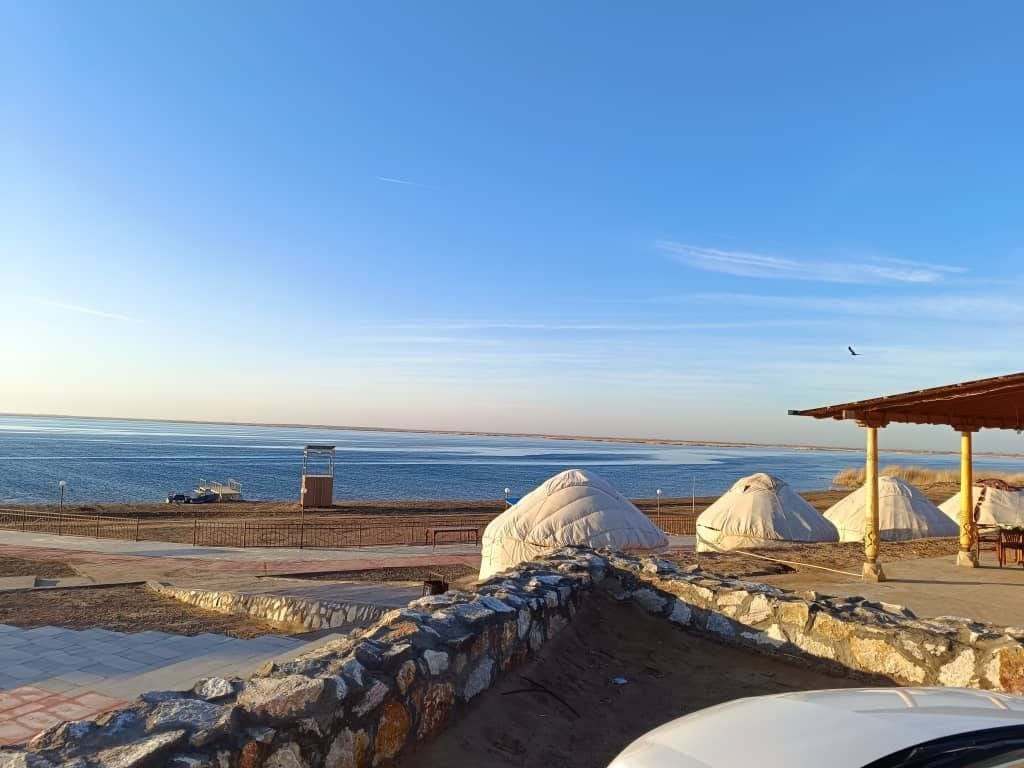
White yurts beside the blue water of the Aral Sea at sunrise, Karakalpakstan, Uzbekistan
Private 2-day tour from Khiva

Aral Sea 2-Day Tour

Rusting ships in the desert, canyons on the Ustyurt plateau and a night in a yurt on the shore of the vanished sea — in your own car and 4×4.

2 days · 1 night Starts & ends in Khiva Private — no group
From
$175
per person · group of 4
whole group from $610
2 days
1 night in a yurt camp
Moynaq
the ship graveyard
4×4
for the desert section
Apr–Jun · Sep–Oct
most comfortable weather

Quick answer: This private 2-day tour takes you from Khiva to the Moynaq ship graveyard, across the Ustyurt plateau to the Aral Sea shore and into a yurt camp for the night. On day 2 you return via Kurgancha Kala, the Mizdakhan necropolis and the Savitsky Museum in Nukus. A sedan covers the paved road to Moynaq and a Prado 4×4 covers the desert section. Dinner and breakfast at the camp are included; museum and site tickets and lunch are not. Prices start at $175 per person for a group of 4; the whole group costs from $610.

Last updated:

Two days from Khiva to the Aral Sea and back

Day 1 goes out to the Aral Sea shore. Day 2 loops back through Nukus. Your driver sets the pace, so you can linger where you like.

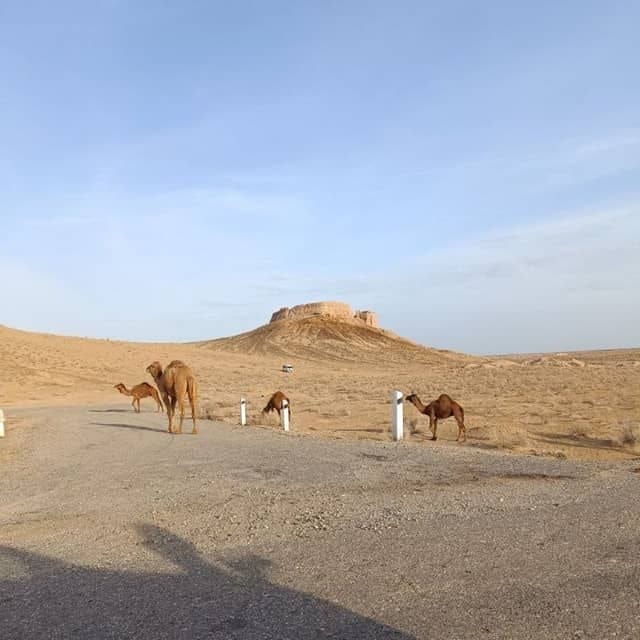
Camels crossing a desert road in front of an ancient hilltop fortress in Karakalpakstan
Day 1 12–14 hours

Khiva to the Aral Sea shore

An early start from Khiva, then a long, rewarding day: an ancient tower, a ship graveyard, desert canyons and the water's edge at sunset.

  1. 1

    Chilpik Kala

    An ancient Zoroastrian Tower of Silence — a round mud-brick tower on a hill above the plain, with a short climb and wide views.

  2. 2

    Moynaq museum

    A small museum in the former fishing port telling the story of the sea: how the harbour worked and how the water retreated.

  3. 3

    Moynaq ship graveyard

    Rusting trawlers stranded in the sand where the harbour once was. Moynaq is now far from the water — the most famous image of the Aral Sea disaster.

  4. 4

    Ustyurt plateau canyons

    The Prado leaves the road and climbs onto the Ustyurt, a vast limestone tableland that breaks off into layered, colourful cliffs and canyons.

  5. 5

    Nomad graves

    Weathered burial grounds of the nomadic peoples who herded across this steppe — silent, photogenic and a reminder of how long people have lived here.

  6. 6

    The Aral Sea shore

    Reach the water's edge in the evening light, walk the shore and watch the sky change over what is left of the sea.
White yurts beside the blue water of the Aral Sea at sunrise, Karakalpakstan, Uzbekistan
Overnight

Your night on the shore of the Aral Sea

You sleep in a traditional yurt beside the water. Dinner and breakfast are served at the camp. With no city lights, the night sky is the real attraction — and sunrise over the sea is the reward for staying.

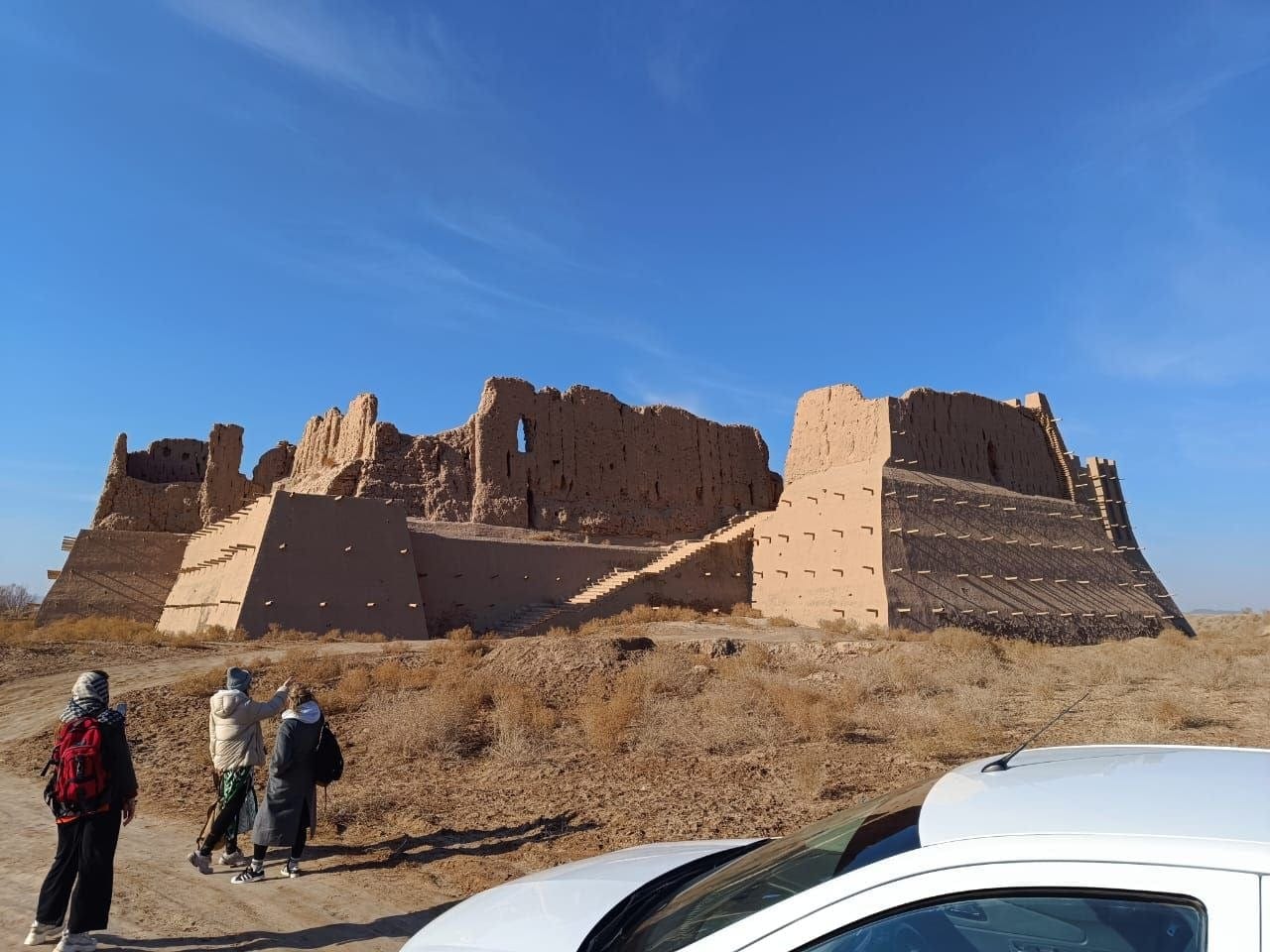
Ancient mud-brick desert fortress in Karakalpakstan with visitors walking towards the walls
Day 2 8–10 hours

Back through Karakalpakstan to Khiva

A slower morning at the camp, then a loop home through fortresses, a vast necropolis and one of Central Asia's most surprising museums.

  1. 1

    Kurgancha Kala

    A ruined fortress of ancient Khorezm rising from the desert — walk the walls and see how oasis kingdoms guarded their edges.

  2. 2

    Mizdakhan necropolis

    A huge ancient burial complex near Khojayli, in use for roughly two thousand years, with domed mausoleums on a hill and many local legends.

  3. 3

    Nukus — Savitsky Museum

    Often called the Louvre of the desert: one of the world's largest collections of Russian avant-garde art, saved from suppression by Igor Savitsky and hidden in a remote Karakalpak city.

  4. 4

    Return to Khiva

    The drive back to Khiva, arriving in the evening. Your driver drops you at your hotel.

What is the best time to visit the Aral Sea?

Spring & autumn

March–May · September–November

Most comfortable
  • Mild days, cool nights — the best conditions for the desert and the shore
  • Soft light for photos at sunset and sunrise
  • Pack a warm layer for the evening and a hat for the day

Summer

June–August

Hot
  • Desert daytime temperatures are often above 40 °C — start early and carry plenty of water
  • Evenings at the shore are the pleasant part of the day
  • Sun protection is essential on the plateau and at the fortresses

Winter

December–February

Cold and quiet
  • Cold wind and freezing nights; you will see almost no other visitors
  • Dramatic winter light on the canyons and the water
  • Tell us your date — we confirm the yurt camp's winter conditions before you pay

The tour is arranged for your dates. Message us and we will check the weather and camp conditions before you commit.

How do you get to the Aral Sea?

There is no public transport to the shore, and the desert section needs a 4×4. Here is how the options compare.

OptionTimeFlexibilityBest for
Private tour with TourFixer (this tour)2 days, 1 night, Khiva to KhivaHigh — your driver waits, you set the pace, 4×4 for the desertCouples, families, small groups, photographers
Shared group tourFixed departure and itineraryLow — shared with strangers, sold per seatSolo travellers on a budget
Public transport or self-driveNot practical for the shorePublic transport reaches Moynaq at best; the desert section needs a 4×4 and local knowledgeExperienced overland drivers only

How much does the Aral Sea tour cost?

One price covers your whole group — cars, 4×4, the yurt night, dinner and breakfast. The more people share, the less each person pays.

1–3 people

US$ 610

Whole group

≈ US$ 204 Per person

4 people

US$ 700

Whole group

US$ 175 Per person

5–7 people

US$ 1290

Whole group

≈ US$ 185 Per person

Prices in US$ for the whole group, shared by everyone. Museum and site tickets, lunch and personal expenses are extra.

Check dates & book

Included

  • Private sedan with driver from Khiva to Moynaq and back
  • Prado 4×4 with driver for the Moynaq – Aral Sea – Moynaq desert section
  • One night in a yurt camp on the Aral Sea shore
  • Dinner and breakfast at the camp
  • Fuel and drivers for both days

Paid separately

  • Museum and site entrance tickets (paid on site)
  • Lunch on both days and drinks
  • Personal expenses and tips
  • A guide — this is a driver-led tour (ask us if you want an English-speaking guide)

What should you know before going?

Bring warm layers

The shore is windy and temperatures drop fast after sunset, even in spring and autumn. In winter, dress for real cold.

Carry cash

Museum and site tickets, lunch and tips are paid on site, mostly in Uzbek som. Card payments are unreliable out here.

Water and sun protection

Take plenty of water, a hat and sunscreen. There is little shade at the fortresses and none on the plateau.

Protect your camera

Desert dust gets everywhere. Keep a cloth for the lens and a bag for your phone and camera.

Expect patchy signal

Mobile coverage can be weak on the plateau and at the shore. Download offline maps and tell your family your route.

Arrive in Khiva the day before

Day 1 starts early and is long. Sleeping in Khiva the night before means you start rested.

Frequently asked questions

Two days and one night. Day 1 takes about 12–14 hours including all stops and the desert section; day 2 takes about 8–10 hours on the way back via Nukus. The tour starts and ends in Khiva.

Getting to Khiva and what else to do

Read before you go
The Complete Aral Sea Guide: Moynaq, the Ship Graveyard, Yurt Camps, Costs and How to Visit
Aral Sea guide
Photos: TourFixer