快速解答
What is the Moynaq ship graveyard?
A group of rusting fishing ships stranded on the sand in Moynaq, a former Aral Sea port in Karakalpakstan, Uzbekistan. The sea retreated and the ships were left where the harbour used to be.
Why did the Aral Sea disappear?
From the 1960s, large amounts of water from the Amu Darya and the Syr Darya were diverted to irrigate crops, especially cotton. Much less water reached the sea, and it shrank dramatically.
Can I see the Aral Sea itself on the Moynaq day trip?
No. The day trip visits Moynaq, the museum and the ship graveyard. The shore needs more time and off-road driving, which is part of the 2-day Aral Sea tour.
How long does the Moynaq day trip from Khiva take?
It is a very long day, mostly on the road. We start very early and return late in the evening, and we confirm the exact times when you book.
本页内容
- 01The Aral Sea before: a sea, a port and a living
- 02What happened to the Aral Sea?
- 03The consequences: a new desert and a changed climate
- 04Moynaq today
- 05The ship graveyard: what you will actually see
- 06The Moynaq museum
- 07The Moynaq day trip from Khiva: what it is, and what it is not
- 08Day trip or 2-day tour: which should you choose?
- 09When is the best time to go?
- 10Practical tips for a smooth day
- 11How to combine Moynaq with the rest of your trip
- 12How much does it cost?
Rusting ships, hulls tilted on their sides, stranded in an ocean of sand. It looks like a film set, or a painting of the end of the world. It is neither: it is Moynaq (also spelled Muynak), a town in Karakalpakstan in north-western Uzbekistan, and the ships are real. They were once fishing boats that sailed from a busy harbour. Then the sea left, and they stayed.
The Moynaq ship graveyard is the most famous image of the Aral Sea disaster, and one of the most powerful places you can visit in Central Asia. It is also one of the most misunderstood, because many travellers do not realise how remote it is, how long the journey takes or what a one-day trip from Khiva can and cannot include.
This guide explains the full story, what you will see on the ground, how the Moynaq day trip from Khiva works, how it differs from the 2-day Aral Sea tour, when to go, what to bring and what it costs. If you simply want the trip, you can see the Moynaq day trip from Khiva now.
The Aral Sea before: a sea, a port and a living
It is hard to picture now, but the Aral Sea was once one of the largest lakes in the world, a huge inland sea fed by two great rivers, the Amu Darya and the Syr Darya. Its waters supported fishing communities all around its shores, and the southern port of Moynaq was among the busiest.
In its prime, Moynaq had a harbour, a fishing fleet and a fish cannery, and it employed thousands of people. Fish from the Aral Sea was canned here and sent across the Soviet Union. The town had a lively port life, with sailors, fishermen and families whose whole world depended on the water.
If you stand in the sand today and look at the empty horizon, it is almost impossible to imagine that you are standing on what used to be the bottom of the harbour.
What happened to the Aral Sea?
The story is simple and shocking. From the 1960s, the Soviet government expanded irrigation across Central Asia, especially to grow cotton in the desert. Huge canals took water from the Amu Darya and the Syr Darya, and much of that water never reached the sea.
With less water flowing in, the Aral Sea began to shrink. Over the following decades the shoreline retreated further and further, and the sea eventually split into separate parts. The shoreline moved away from Moynaq by well over a hundred kilometres, leaving the town far from the water and the boats stranded on dry land.
The fishing industry collapsed, and with it the cannery and the jobs. Many people left Moynaq to find work elsewhere, and the town that once had a busy harbour became a quiet place at the edge of a new desert.
Only have one day?
Private Moynaq day trip from Khiva. Sedan from $160, minivan from $280 for the whole car.
The consequences: a new desert and a changed climate
The loss of the sea was not just an economic disaster. It changed the land and the lives of the people around it:
- A new desert. The exposed seabed became a salty, dusty desert, sometimes called the Aralkum.
- Salt and dust storms. Winds pick up salt and dust from the dry seabed and carry them across the region, which affects farmland and health.
- A harsher climate. Without the moderating effect of a large body of water, summers became hotter, winters colder and the air drier.
- Lost livelihoods. Fishing communities lost their way of life, and the region faced serious economic and health challenges.
There is one more hopeful chapter. In Kazakhstan, to the north, the construction of the Kok-Aral dam in the 2000s helped the northern part of the sea recover, and fishing returned there. The southern part, on the Uzbek side, remains largely dry, which is why Moynaq is still so far from the water.
If you want the bigger picture of the whole region, from the shore to the canyons to the yurt camps, read our complete Aral Sea guide.
Moynaq today
Moynaq is now a small, quiet town, much smaller than in its busy years. You will see low buildings, a few shops and the wide open land that surrounds it. Visitors come for the ship graveyard and the museum, and tourism has become one of the new sources of income for local people.
It is a good idea to approach the visit with respect. For many families here, the ships are not just a photo opportunity but a reminder of a lost way of life. A quiet, thoughtful visit is the best way to experience the place.
The ship graveyard: what you will actually see
The ship graveyard is a group of rusting fishing vessels standing on open, sandy ground on the edge of the town, where the harbour once was. What you can expect:
- Old trawlers and fishing boats, in various states of decay, some upright and some leaning. Their size surprises many visitors.
- A huge sky and a flat horizon. There is very little else in view, which gives the scene its stark, quiet power.
- Wind. The wind is almost constant here, and it can be strong and cold. Bring a jacket, even in summer.
- Light that changes the mood. In the morning and late afternoon, the low sun gives long shadows and warm colours. At midday the scene is harsher.
The ships weather and change over time, and what you see on one visit may differ slightly from another. Walk carefully, do not climb on the vessels and do not take pieces as souvenirs.
Bring a cloth for your camera lens, because the dust is fine and gets everywhere.
The Moynaq museum
The town has a small museum that tells the story of the harbour: how people lived from the sea, what the port looked like at its peak and how the water retreated. It is modest in size, but it gives context that makes the ships much more meaningful. Spend some time here before or after you walk among the vessels, because it turns a photo stop into a story.
 Most travellers choose this
The 2-day Aral Sea tour with a night in a yurt
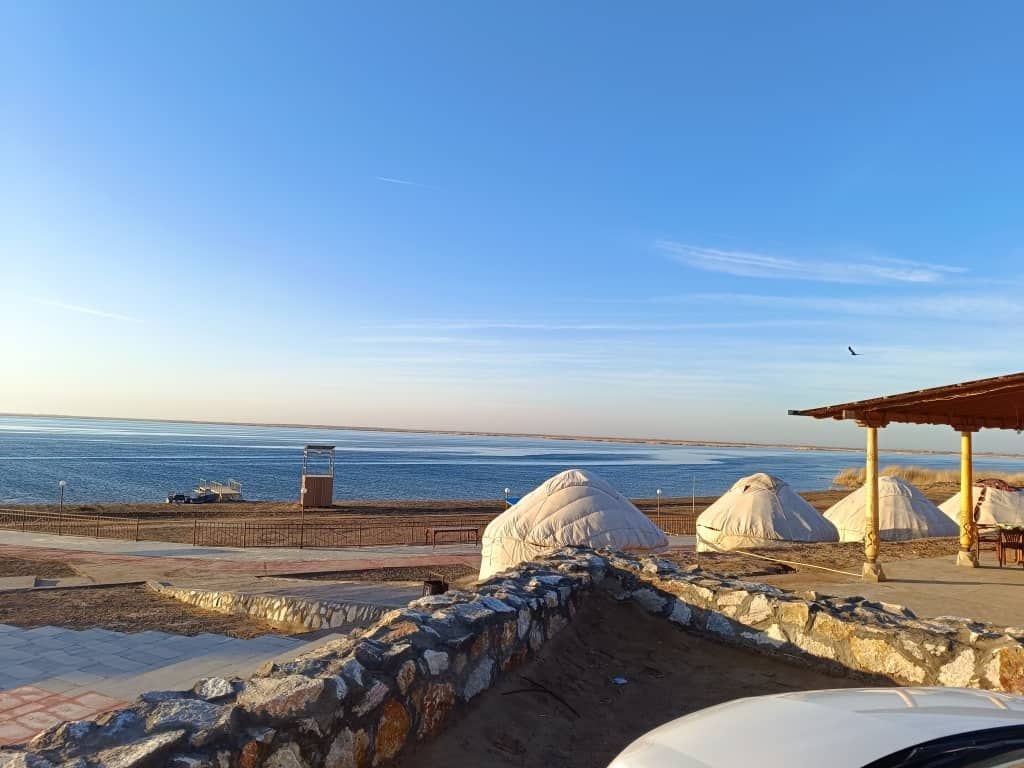
See Moynaq, then the Ustyurt plateau and the Aral Sea shore at sunset, with a night in a desert yurt camp.
- ✓Private car and 4×4
- ✓Yurt night, dinner and breakfast
- ✓One price for the whole group
The Moynaq day trip from Khiva: what it is, and what it is not
Moynaq is a very long way from Khiva. A one-day trip is possible, but it is demanding, and it helps to know exactly what it includes.
What the day trip does:
- Takes you by private car from Khiva to Moynaq and back in a single day.
- Visits the Moynaq museum and the ship graveyard.
- Leaves you with a clear sense of the Aral Sea story.
What it does not do:
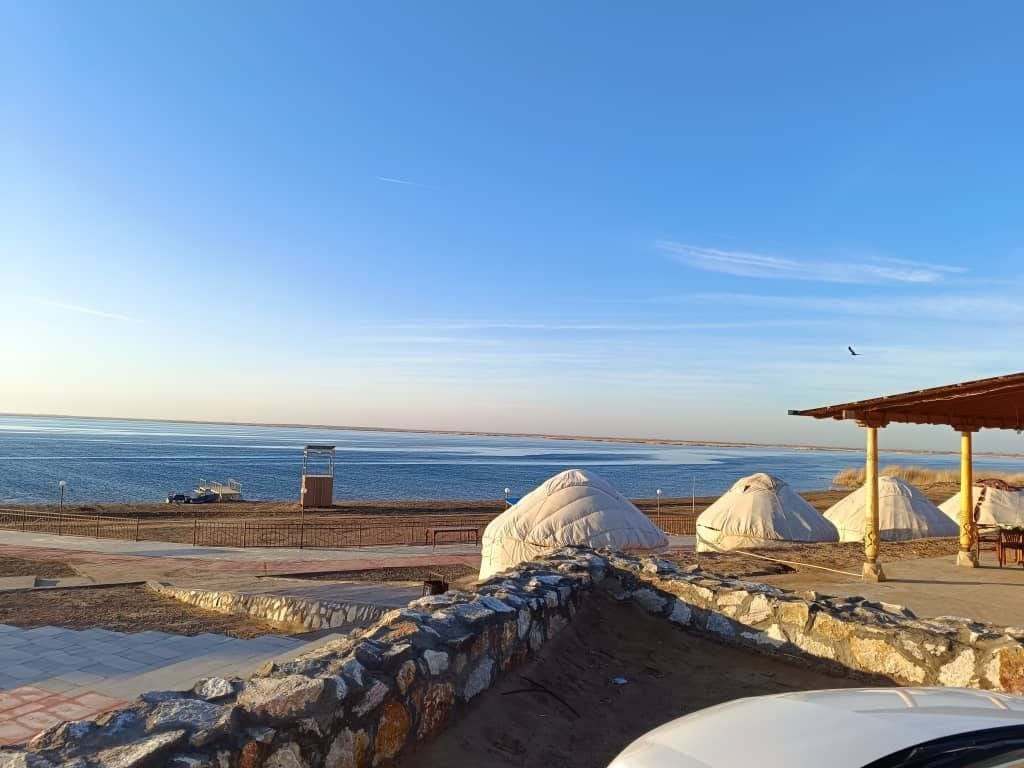
- It does not reach the shore of what remains of the Aral Sea. That needs more time and off-road driving.
- It does not include the Ustyurt plateau, a sunset at the water or a night in a yurt.
A typical day starts very early, with a long drive across the desert to Moynaq, time at the museum and the ships in the afternoon, a rest stop on the way and a late return to Khiva in the evening. We confirm the exact times when you book.
Day trip or 2-day tour: which should you choose?
This is the most important decision you will make, so here is the honest comparison.
Choose the one-day trip if:
- You have only one day to spare, or you are on a tight schedule.
- You mainly want to see the ship graveyard and understand the story.
- You are comfortable with a very long day in the car.
Choose the 2-day tour if:
- You want to see the actual Aral Sea shore, not just the town.
- You would like the Ustyurt plateau, a sunset at the water and a night in a yurt camp.
- You prefer a more relaxed pace, with less of the journey in one go.
Most travellers who can spare the time say the 2-day tour is far more rewarding. See the 2-day Aral Sea tour from Khiva for the full plan, or read the complete Aral Sea guide to compare.
When is the best time to go?
Moynaq is open to visitors all year, but the conditions differ a great deal:
- Spring (April to May) and autumn (September to October) are the most comfortable, with moderate temperatures and good light.
- Summer (June to August) is very hot, and the open ground has no shade. Start early, bring plenty of water and a hat.
- Winter (November to March) is cold and windy, and the days are short. The scene can be especially stark and beautiful, but dress warmly.
For photographs, the hour after sunrise and the hour before sunset are best in every season.
See the Moynaq ship graveyard in one long day
Your own car and driver, an early start and hotel pick-up. The driver waits while you explore the ships and the museum.
- ✓Sedan from $160, minivan from $280 for the whole car
- ✓Hotel pick-up and drop-off in Khiva
- ✓Choose your date, we confirm within hours
Practical tips for a smooth day
- Be ready for a very long day. You will spend many hours in the car. Bring snacks, music or a book, and charge your phone.
- Dress in layers. It can be hot in the sun and cold in the wind on the same day.
- Wear closed shoes. The ground is sandy and uneven, with metal and debris around the ships.
- Bring water and sun protection, and a cloth or scarf for dust.
- Carry some cash for entrance fees, lunch and drinks. These are paid on the spot.
- Protect your camera from the fine dust.
- Visit with respect. For local people, the ships are a memory of a lost way of life.
- Consider two days if you want the shore, a sunset and a night in a yurt.
How to combine Moynaq with the rest of your trip
Moynaq works best as part of a wider Karakalpakstan itinerary:
- With the 2-day Aral Sea tour. Moynaq is the first big stop on the 2-day tour, followed by the Ustyurt plateau and the shore.
- With Nukus and the Savitsky Museum. Nukus is on the road. Read our guide to Nukus, the Savitsky Museum and Mizdakhan.
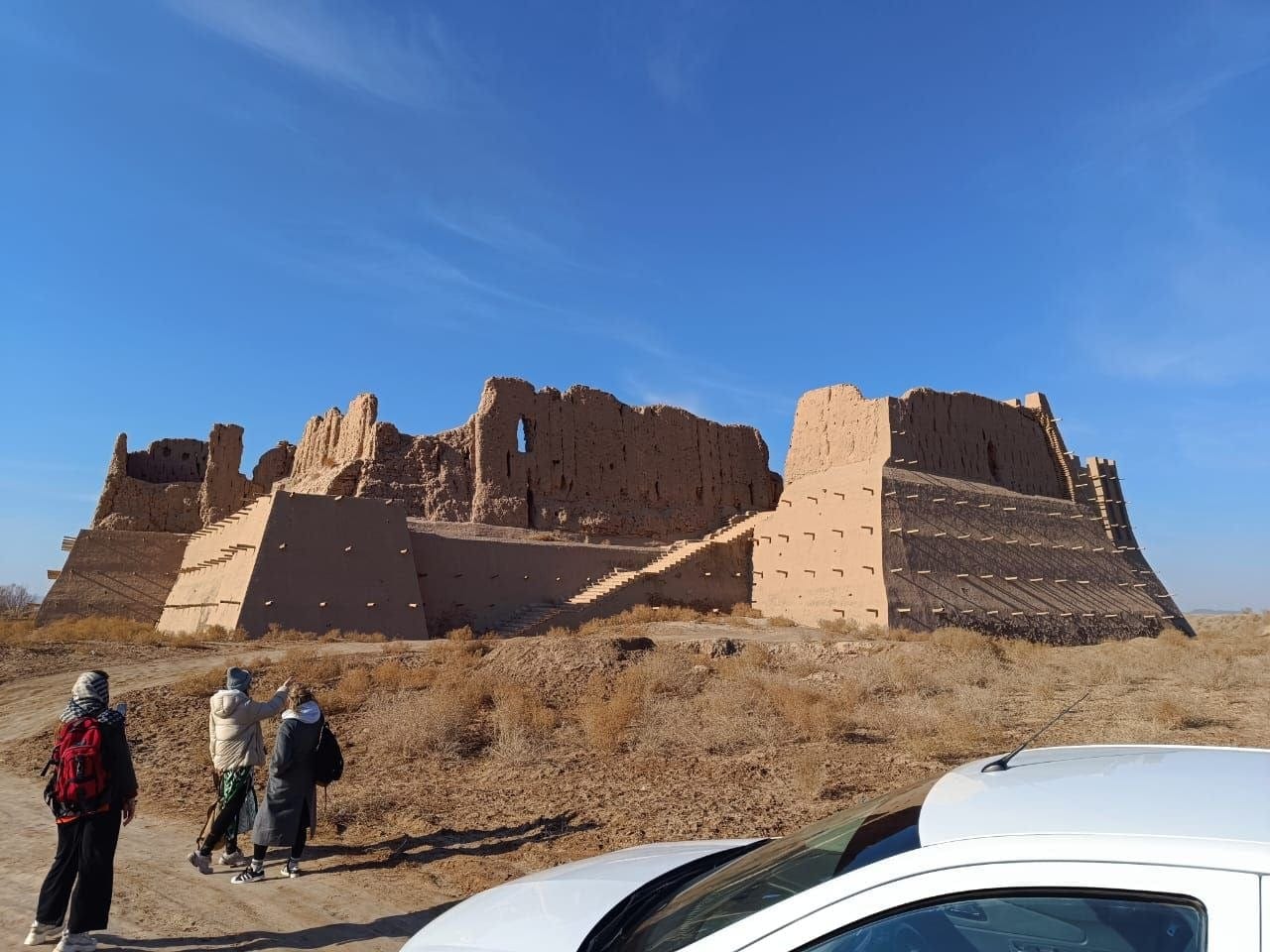
- With the Khorezm fortresses. Add a second day among the ancient ruins: see the desert fortresses guide.
- With Khiva. Khiva is the natural base for all of these. See our Khiva to Nukus transfer guide if you are heading onward.
How much does it cost?
The Moynaq day trip is priced per vehicle, so your price per person falls as the group grows:
- Sedan (1 to 3 people): $160 for the whole car
- Minivan (4 to 7 people): $280 for the whole car
The price includes a private car with driver for the whole day, fuel, and hotel pick-up and drop-off in Khiva.
Not included (paid on the spot): museum and site entrance tickets, lunch and drinks, tips, and a guide if you want one.
Because of the distance, this is the most expensive of our Khiva day trips, which is another reason many travellers choose the 2-day tour. Check the date and book here.
Ready to go?
from $160 per car
Book your Moynaq day trip
Private, flexible and priced per car. Tell us your date and group size and we confirm quickly.
常见问题解答
What is the Moynaq ship graveyard?
A group of rusting fishing ships stranded on the sand in Moynaq, a former Aral Sea port in Karakalpakstan, Uzbekistan. The sea retreated and the ships were left where the harbour used to be.
Why did the Aral Sea disappear?
From the 1960s, large amounts of water from the Amu Darya and the Syr Darya were diverted to irrigate crops, especially cotton. Much less water reached the sea, and it shrank dramatically.
Can I see the Aral Sea itself on the Moynaq day trip?
No. The day trip visits Moynaq, the museum and the ship graveyard. The shore needs more time and off-road driving, which is part of the 2-day Aral Sea tour.
How long does the Moynaq day trip from Khiva take?
It is a very long day, mostly on the road. We start very early and return late in the evening, and we confirm the exact times when you book.
Is the Moynaq day trip worth it?
Yes, if you want to see the ships and understand the story and can spare only one day. If you can spare two, the 2-day tour that reaches the shore is more rewarding.
How much does the Moynaq day trip cost?
A sedan for up to 3 people costs $160 and a minivan for up to 7 people costs $280. The price is for the whole vehicle. Tickets and lunch are paid on the spot.
How do I get to Moynaq from Khiva?
A private car and driver is the practical way. Public transport does not link the sights, and the distance is large.
What is the best time of year to visit Moynaq?
Spring and autumn are the most comfortable. Summer is very hot and winter is cold and windy, but the scene is striking in both.
What should I wear?
Layers. It can be hot in the sun and cold in the wind. Wear closed shoes and bring a hat, water and a scarf for the dust.
Is there anything to eat in Moynaq?
There are simple places to eat, but options are limited, so your driver will advise where to stop. Lunch is not included in the price.
Can I do Moynaq and Nukus on the same day?
That would be too much for one day. The 2-day Aral Sea tour includes Moynaq, the shore and a night in a yurt, followed by Nukus and its sights on day 2.
作者
TourFixer Team
Uzbekistan Travel Experts